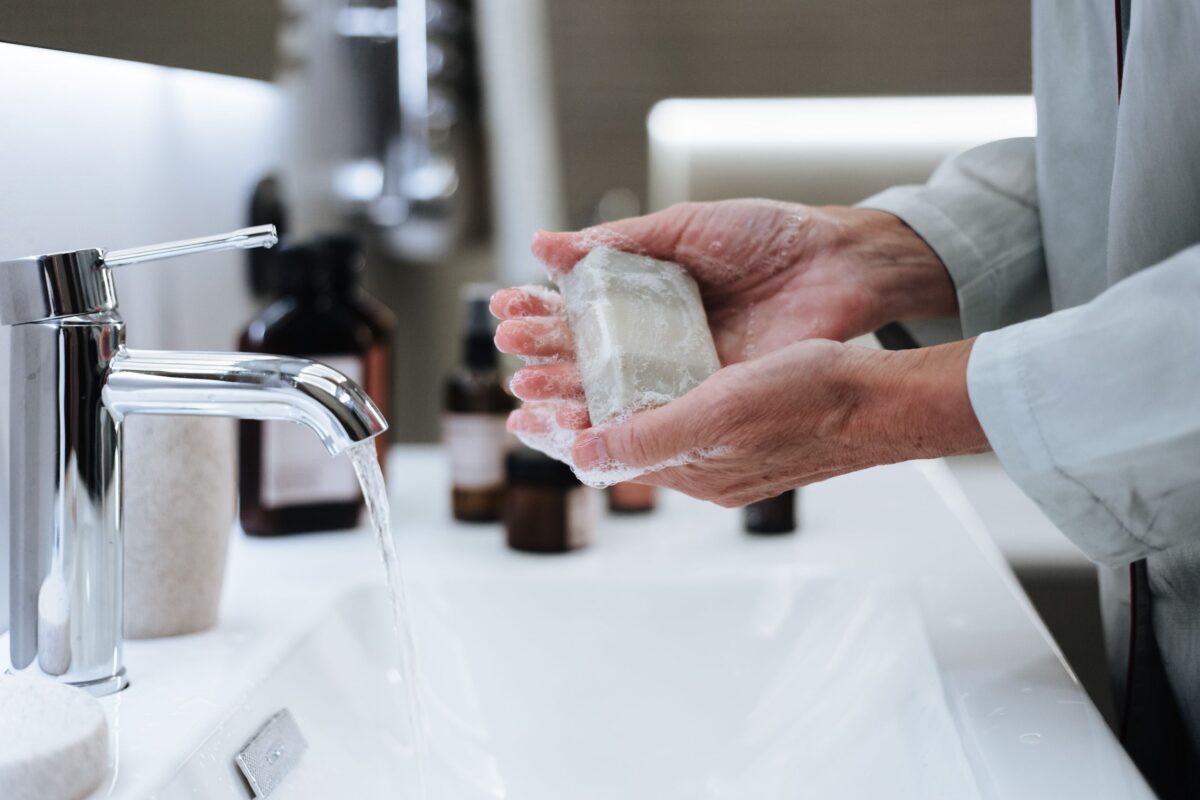
Brussels added palm-based soap and a list of oleochemicals to the EUDR on 4 May. Six days earlier, two EU chemical industry trade bodies had publicly asked for exactly that. The Commission’s stated reasoning mirrors theirs almost word for word as it shifts its protectionism from farming to manufacturing.
Last week European Commission published the long-awaited EUDR simplification package. Fourteen new product codes added to the regulated list. Cattle hides and leather, by contrast, are being removed.
The additions sit in three groups. Modified palm oils, a wide oleochemicals complex, and consumer products including palm-based soaps.
This is a nuanced picture for palm exporters, but a problematic picture for things further downstream. Here’s why.
Six days before the Commission’s package, APAG (Oleochemicals Europe) and CESIO (European Committee of Organic Surfactants and their Intermediates) issued a joint statement on the EUDR review.
The statement supports the EUDR’s environmental objectives and calls the upcoming review “a key opportunity to address certain inconsistencies in the current scope.” It then sets out what those inconsistencies are:
“Several oleochemical and surfactant derivatives originating from regulated commodities, such as palm and palm kernel oil, are not currently included [in Annex I]. As a result, products derived from the same feedstock may be subject to different and sometimes contradicting regulatory treatment depending on their classification under Annex I.”
The commercial logic is straightforward and the statement does not hide it. EU-located oleochemical producers buy palm and palm kernel oil from Indonesia as feedstock. Under the existing Annex I scope, they bear EUDR compliance cost on that feedstock the moment it enters the European market.
But their competitors from outside the EU face no equivalent obligation, because finished palm-derived oleochemicals were not on the list. The result, the statement notes, is that “EU operators processing regulated commodities into downstream derivatives face different more burdensome obligations compared with operators importing derivatives that are not covered by Annex I.”
The fix APAG and CESIO requested is obvious: Add the finished derivatives to Annex I: “a level playing field for all commercial trade parties (EU-based EUDR operators and not in scope importers and exporters).” Their closing thought: “EU competitiveness does not erode further.”
This is, by the usual definitions, a request for a regulatory measure that raises costs on imports to protect domestic production.
The Commission’s 4 May package largely delivers what APAG and CESIO asked for. The Staff Working Document’s qualitative justification for adding palm-derived oleochemicals and soap to Annex I rests on what it calls “supply-chain coherence”. The Commission’s reasoning: excluding the downstream derivatives “could result in a fragmented approach along the palm oil supply chain.” Add the derivatives, restore the coherence, level the playing field.
This presentation is environmental in vocabulary but industrial-policy in operation.
The most striking feature of the Staff Working Document is that the Commission’s own quantitative analysis fails to support its own conclusion for soap. The methodology the Commission set out for itself has two paths: Path I requires a commodity-share threshold; Path II requires absolute or relative deforestation values above defined thresholds plus an administrative-burden ratio below 5% of trade value.
HS 3401 11 00 — palm-based toilet soap bars — has estimated environmental benefits of €4.0 million per year against recurring compliance costs of €10.9 million per year. Costs are 2.7 times benefits. The 4,083 EU importers affected are overwhelmingly SMEs.
HS 3401 20 — palm-based soap in other forms — has €2.5 million of benefits against €9.7 million of compliance costs (a 3.9 ratio), with an administrative-burden ratio of 9.9% of trade value. That is almost double the 5% threshold the Commission set for itself.
Both subheadings fail. The Commission acknowledges the failure in plain text in the Staff Working Document and justifies inclusion anyway on the “qualitative” coherence ground. That is a discretionary override of the Commission’s stated methodology, which is permissible in principle but warrants scrutiny when the override aligns precisely with the position EU industry lobbyists had publicly requested six days earlier.
And the coherence logic is selectively applied.
Surfactants (HS 3402) have estimated compliance costs of €16.5 million against €9.4 million in environmental benefits. Same direction of failure as soap, larger absolute numbers, plainly the same supply-chain-coherence story. Surfactants are not added.
Cattle hides and leather (HS 4101, 4104, 4107) are being removed from scope. According to the Commission’s own analysis, the environmental benefits of leather inclusion sit between €876 million and €1.957 billion per year — an order of magnitude larger than all 14 palm-derivative additions combined. The Commission’s reasoning for removal is that compliance is too burdensome for EU operators. It is the same compliance-burden argument that EU industry made for adding palm derivatives.
And soya-based soap is not analysed at all in the Staff Working Document. Soya is one of the seven EUDR commodities; Brazil is a standard-risk producer with documented deforestation exposure; soybean oil is a viable soapmaking feedstock with established commercial use.
A formulator can switch from palm to soy and reduce EUDR compliance obligations to zero on the soap line. The relocation of deforestation risk that the Commission cites as the reason for including palm soap operates equally — arguably more — for soy soap, which is not added.
The Commission has applied its coherence reasoning in directions that align with EU industry requests and ignored it in directions that do not.
The new scope expands compliance cost on EU importers of finished palm-derived oleochemicals and on the Indonesian companies that supply them. It does not, in the first instance, increase compliance cost for upstream CPO and RPO producers, who were already in scope under the original Annex I. The administrative burden the Staff Working Document quantifies — somewhere around €40-50 million per year across the new product codes — is paid by EU operators and ultimately by EU consumers.
For Indonesian palm producers, two effects matter. First, the downstream segment of the oleochemical export business to the EU faces NTMs that did not exist before, and some of that volume will likely shift to non-EU markets (China, India, ASEAN, Middle East) or be replaced inside the EU by domestic oleochemical capacity expansion.
Second, if EU capacity does expand, it will need more upstream feedstock. EU CPO and PKO imports from Indonesia and Malaysia may rise even as finished derivative exports fall.
Alongside the scope expansion, the package commits the Commission to establishing two new repositories before December 2026. The legality repository will hold structured descriptions of producer-country legal frameworks for EU operators to reference in demonstrating EUDR legality compliance. The certification scheme repository will hold information about voluntary schemes — RSPO, ISCC, ISPO — that operators may cite in their risk assessments.
The Commission’s package is being positioned as simplification. For Indonesian and Malaysian palm exporters and the finished oleochemicals supply chain that runs through Singapore, China and India before arriving at EU ports, it adds compliance volume without offsetting simplification.
The 75% headline reduction in compliance costs the Commission cites is achieved primarily through the simplified regime for micro and small primary operators in low-risk countries — a category that excludes Indonesia.
The 4 May package is many things at once. It is a simplification for some, a scope expansion for others, and a clear statement about which constituency the Commission listens to most. APAG and CESIO are not particularly secretive about what they asked for or why. The Commission, in delivering it, has chosen to call it environmental coherence rather than industrial policy. That is a political choice, and a typical one in Brussels, but it is worth naming for what it is.